
Before You File an Insurance Claim, Read This.
I’ve been a Public Adjuster for nearly a decade, and in that time, my estimation software shows 1,423 estimates (and counting). Almost all of them involve storm damage claims. After years of inspecting roofs and working with insurance companies, I’ve learned how to give homeowners honest assessments of their chances for approval.
Each claim—whether it ends in full approval or denial—takes about 15 office hours to process. Trust me, it’s in my best interest not to exaggerate the odds. So, what exactly do I look for before advising a homeowner to file?
Step 1: Know What Insurance Really Covers
Every policy sounds reassuring on paper. Most say something like:
“We cover injury to, destruction of, or loss of use of covered property.”
Sounds simple, right? A tree limb punches a hole through your shingles? Covered. A hailstone knocks off protective granules and exposes the fiberglass? Covered. Wind breaks the factory seal that held your roof together since installation? Covered.
Seems like insurance is easy money. Wrong.
Of those three examples, only one typically results in coverage more than half the time.
Step 2: Understand the Game (Because It Is a Game)
It’s not paranoia if they really are out to get you. Insurance companies will use every trick to avoid paying—hoping you’ll say the wrong thing or stay uninformed.
I’ll never forget one claim in Soddy Daisy. The ink was still drying on a check for a full roof replacement when the homeowner casually said, “Yeah, ever since I pressure-washed the shingles, it just hasn’t been right.”
The adjuster grinned, tore up the check on the spot, and declared the roof denied. Mission accomplished.
Step 3: It Depends on Your Insurance Company
Before I can give real advice, I need to know who your carrier is. Every company has its own internal guidelines. Those are rules that go beyond the written policy. (Sounds fair and transparent, doesn’t it?)
Unfortunately, my license doesn’t allow me to publicly name the companies that are notoriously stingy. Let’s just say if I were a good neighbor, I might be tempted to loosen my lips—but I like keeping my license too much.
Step 4: What I Look for on Your Roof
If your insurance company is at least somewhat reasonable, I’m looking for two main types of damage:
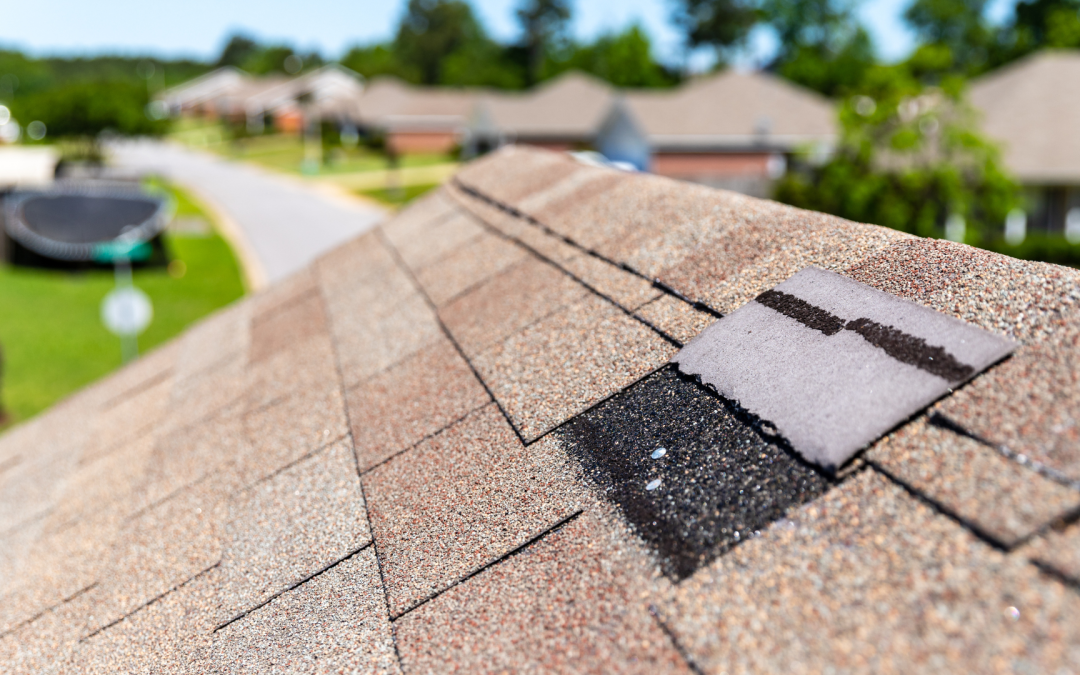
- Wind Damage: Missing, creased, bent, torn, or crushed shingles.
- Hail Damage: Round, circular indentations in the shingle gravel, ideally soft to the touch or deep enough to pierce the fiberglass underneath.
Here’s the catch: wind damage is far more valuable than hail damage. Why? Because insurance companies will argue endlessly about whether hail caused “functional” damage. Some carriers even require six full punctures per 100 square feet to approve a hail claim, others will deny hail damage entirely, even if you have smartphone footage of ping-pong-ball-sized stones raining from the sky.
Why Wind Damage Wins in Tennessee
Tennessee law requires insurance companies to provide a “reasonable uniform appearance” when making repairs. That means if your shingles are discontinued or your color is no longer available, just one wind-damaged shingle can trigger a full roof replacement.
You read that right: one shingle can get you a brand-new roof.
Get a Free, Honest Roof Evaluation
If you’re unsure about whether to file a claim, don’t guess. Call us or schedule a free, no-pressure inspection. We’ll give you a detailed report and an honest assessment of your chances—no games, no exaggerated promises.